
Verified journal update
Blunt vs. Joint: Which One Are You Actually Smoking?
Blunt vs. Joint: Which One Are You Actually Smoking?

A blunt is traditionally cannabis rolled in a cigar shell or tobacco-leaf wrap, while a joint is cannabis rolled in thin paper. The difference that matters most: a traditional blunt includes tobacco in its wrap; a joint usually doesn’t.
If you’re choosing between them, consider more than the look or the vibe. The wrap can change the taste, burn, smoke, and whether tobacco and nicotine are part of the session. Here’s the straight comparison, without judging anyone’s choice.
Blunt vs. joint: the quick comparison
| Traditional blunt | Joint | |
|---|---|---|
| What it is | Cannabis rolled in a cigar shell, cigarillo wrapper, or tobacco-leaf wrap | Cannabis rolled in thin rolling paper |
| Wrap or paper | Tobacco-based shell or leaf; some products sold as “blunt wraps” are tobacco-free, so check the label | Typically thin rolling paper, often made from materials such as rice or hemp |
| Tobacco content | Yes, if it uses a tobacco wrapper, even when the tobacco filler is removed. Nicotine exposure is possible. | Typically no tobacco or nicotine in the paper |
| Taste and terpene flavor | Tobacco, wrap, or added flavor can change the taste and compete with the flower’s aroma | Often a more cannabis-forward taste, though paper and combustion still affect flavor |
| Burn and session length | A thicker wrap may burn more slowly, but results depend on the wrap, packing, and conditions | Thin paper may burn faster; tightness, airflow, and conditions matter |
| How much herb it holds | Varies by size and how it’s rolled; larger blunts may hold more than a small joint | Varies by size and how it’s rolled; “joint” doesn’t equal a fixed amount |
| Cost | Depends on the wrap and size; the wrap is an additional purchase | Papers are generally inexpensive; pre-rolled options add convenience and cost |
| Smell | Cannabis smoke plus the aroma of the tobacco wrap or its flavoring | Pungent cannabis smoke, usually without the tobacco-wrap aroma |
| Tobacco exposure | Adds exposure from a tobacco-based wrapper; smoking also produces combustion smoke | Avoids tobacco from the wrapper, but still involves inhaling smoke |
| Beginner ease | Can take practice to prepare and roll | Rolling takes practice, too; pre-rolled cones are ready to fill |
These are general tendencies, not guarantees. Wrap composition, size, moisture, packing, and how a session goes can all change the experience.
The wrap is the real difference
A classic blunt usually starts with a cigar or cigarillo shell: the tobacco is removed and cannabis goes in its place. But taking out the filler doesn’t turn a tobacco wrapper into paper. If the wrap is made from tobacco leaf, tobacco is still part of what you’re smoking.
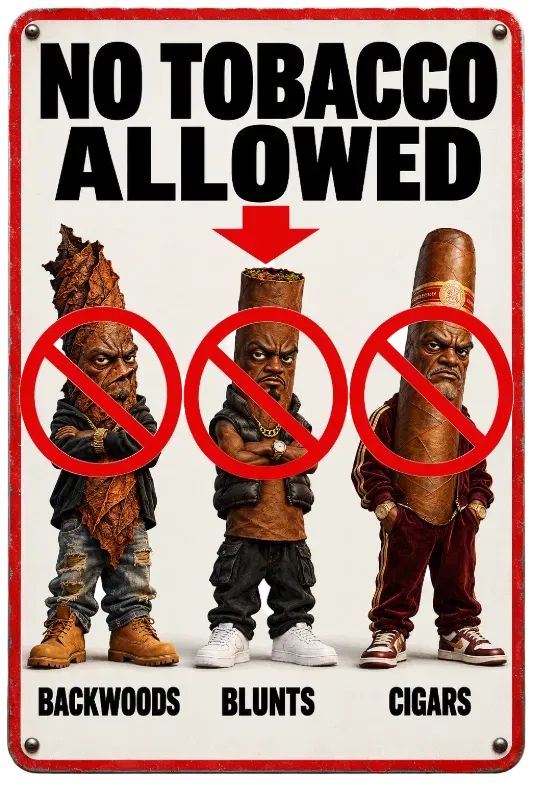
That’s the idea behind N.T.A., No Tobacco Allowed. It isn’t about shaming people who smoke blunts. It’s about making the tobacco in a traditional blunt visible, then giving adults who want to skip it another option.
There are also blunt wrap alternatives made without tobacco, including some hemp-based wraps. “Blunt” is sometimes used loosely for these products, so read the packaging rather than relying on the name. Tobacco-free doesn’t mean smoke-free or risk-free: burning cannabis and any wrap still creates smoke.

Taste, terpenes, burn, and size: what changes?
A joint’s thin paper tends to let the flower’s aroma come through more directly, while tobacco wraps can bring their own earthy, sweet, or flavored notes. That doesn’t mean a joint preserves every terpene or that a blunt delivers a better one. Heat and combustion alter what you smell and taste, and there isn’t a simple rule that one format delivers more “terpenes.”
Burn time is just as variable. A thicker wrap may burn more slowly than thin rolling paper, but construction and conditions matter. The same goes for size: some blunts are bigger than some joints, but neither name tells you how much herb is inside. Compare actual size or amount, not the label.
Cones vs. blunts: a third option
If you like the ready-to-go shape of a blunt but want to leave tobacco out, consider pre-rolled cones. My Empties® King Size cones are 109mm and made with natural flax, hemp, or rice paper. Their wider opening makes them easier to fill, and you don’t need rolling skills to get started.
No tobacco wrap means no nicotine buzz from that wrap, and the paper offers a more direct way to taste the flower. It’s a practical alternative, not a health claim. No smoking is risk-free; removing tobacco reduces tobacco exposure but doesn’t make smoking safe. The CDC notes that cannabis smoke contains many of the same toxins, irritants, and carcinogens as tobacco smoke and can harm lung tissue. (CDC: Cannabis and Lung Health)
For a closer look at the case for cones, visit 10 reasons why cones are better for you than tobacco with cannabis. For The Coneverse story behind the products, meet the brand.

FAQ: blunt vs. joint
Is a blunt stronger than a joint?
Not automatically. “Stronger” can mean more cannabis, more THC, a more intense effect, or the added sensation of nicotine, and those aren’t the same thing. The amount and potency of the flower matter, while a traditional tobacco wrap can add nicotine exposure.
In one small lab study of 48 experienced blunt smokers, participants smoked standardized cannabis in joints or blunts. Joints produced higher plasma THC and stronger subjective intoxication ratings in that study, while blunts produced higher carbon-monoxide levels. That result doesn’t predict every real-world session; it does show why format alone can’t answer “is a blunt stronger than a joint?” (Study: joints and blunts compared)
Is a blunt worse for you than a joint?
A traditional tobacco-wrapped blunt adds tobacco exposure, including possible nicotine exposure, on top of the risks of inhaling cannabis smoke. A joint avoids tobacco from its paper when made with ordinary rolling paper, but it still involves smoke. Neither option is risk-free, and no smoking method should be described as safe.
What’s the difference between a blunt, a joint, and a spliff?
A traditional blunt uses a cigar or tobacco-leaf wrap. A joint uses rolling paper and cannabis. A spliff typically mixes cannabis with tobacco inside rolling paper. The details vary by region and product, so check what’s actually in the wrap or mix.
Are tobacco-free blunt wraps the same as joints?
No. A tobacco-free wrap may be thicker or made from a different material than thin joint paper, which can change the taste and burn. Check the ingredients and product description: “blunt wrap” doesn’t always mean tobacco, and “tobacco-free” doesn’t mean smoke-free.
Are king size cones easier for beginners?
They can be. A pre-rolled cone is already shaped, so you skip rolling the paper and focus on filling it. My Empties King Size cones have a wider opening, which makes packing simpler for people who don’t want to master hand-rolling first.

Tobacco is a habit worth questioning, not a reason to judge the people who have it. N.T.A. is our invitation to make a different choice, and CONEMRADES are building a culture around tobacco-free cone sessions. See what it means to become a CONEMRADE.
Skip the tobacco wrap. Pack a King Size cone. Then wear the world. Shop the Cone Heads In Harmony graphic tee for $29.99, grab your cones, and stand with the CONEMRADES and the N.T.A. movement.
Keep exploring